Your First Anti-Wrinkle Treatment: What You Need to Know
One of the most common concerns among people considering anti-wrinkle treatment for the first time is looking frozen or losing their natural expression.
It is an understandable concern. Facial expressions are an important part of how we communicate, and treatment should not automatically mean removing every line or stopping all movement.
This guide explains what anti-wrinkle treatment does, what happens during an appointment, when results develop, the possible risks and why a proper facial assessment is more important than simply choosing “one, two or three areas”.
What is anti-wrinkle treatment?
People often use “Botox” as a general term for anti-wrinkle injections. Botox® is actually one brand name for botulinum toxin type A, which is a prescription-only medicine.
When carefully placed into a selected facial muscle, botulinum toxin temporarily reduces the strength of that muscle’s movement. This can soften expression lines created by repeatedly frowning, raising the eyebrows, smiling or contracting other muscles of the face.
It is not the same as dermal filler. It does not add volume, physically fill a wrinkle or replace lost collagen. The two treatments work differently and are used for different concerns.
Which lines can be treated?
The areas most people are familiar with are:
Horizontal forehead lines
Frown lines between the eyebrows
Crow’s feet around the eyes
However, these are only a small part of the muscular activity taking place across the face.
Depending on the individual assessment, muscle-relaxing treatment may also be considered for concerns such as:
A downward-pulling or uneven eyebrow
Bunny lines across the nose
A gummy smile
Lines around the lips
Downturned corners of the mouth
Chin dimpling or tension
Vertical neck bands
Excessive jaw clenching
A bulky or overactive masseter muscle
Excessive sweating
Not every concern is suitable for this type of treatment. Different parts of the face also require different treatment approaches, making an individual assessment essential.
It’s not really about “one, two or three areas”
Anti-wrinkle treatment is commonly priced and discussed as “one, two or three areas”, so it is understandable that patients begin to think about their faces in this way.
However, facial muscles do not work as separate areas. They interact with one another.
Some muscles lift, while others pull down. This can be thought of as a gentle tug of war taking place across the face. If the activity of one muscle is changed without considering the opposing muscles, it may alter the overall balance.
This is why the whole face should be assessed—even if the patient is only concerned about one particular line.
It does not mean that everybody needs several areas treated. Sometimes one carefully selected area is exactly right. In another patient, considering a combination of connected muscles may produce a softer and more balanced outcome than repeatedly focusing on one isolated line.
The number of areas should come after the assessment, not before it.
It isn’t only about the forehead
Most first-time patients know about treating forehead lines, frown lines and crow’s feet. The muscles of the lower face and neck are often overlooked.
These muscles can contribute to:
Downturned corners of the mouth
Chin dimpling or tension
Downward pull through the lower face
Changes around the jawline
Vertical neck bands
Jaw clenching and tension
As the face ages, changes occur within the skin, fat compartments, ligaments and underlying bone. This gradual loss of support can make the downward pull from certain muscles more noticeable.
In a suitable patient, carefully treating selected lower-face or neck muscles may help restore balance rather than simply smoothing another forehead line.
However, the muscles in this area are also involved in smiling, speaking, eating and controlling the lips. Lower-face treatment therefore requires particular care and is not appropriate for everybody.
The important question is not simply, “How many areas should be treated?”
It is: “Which muscles are contributing to the concern, and how can balance be improved while preserving natural expression?”
Why the consultation matters
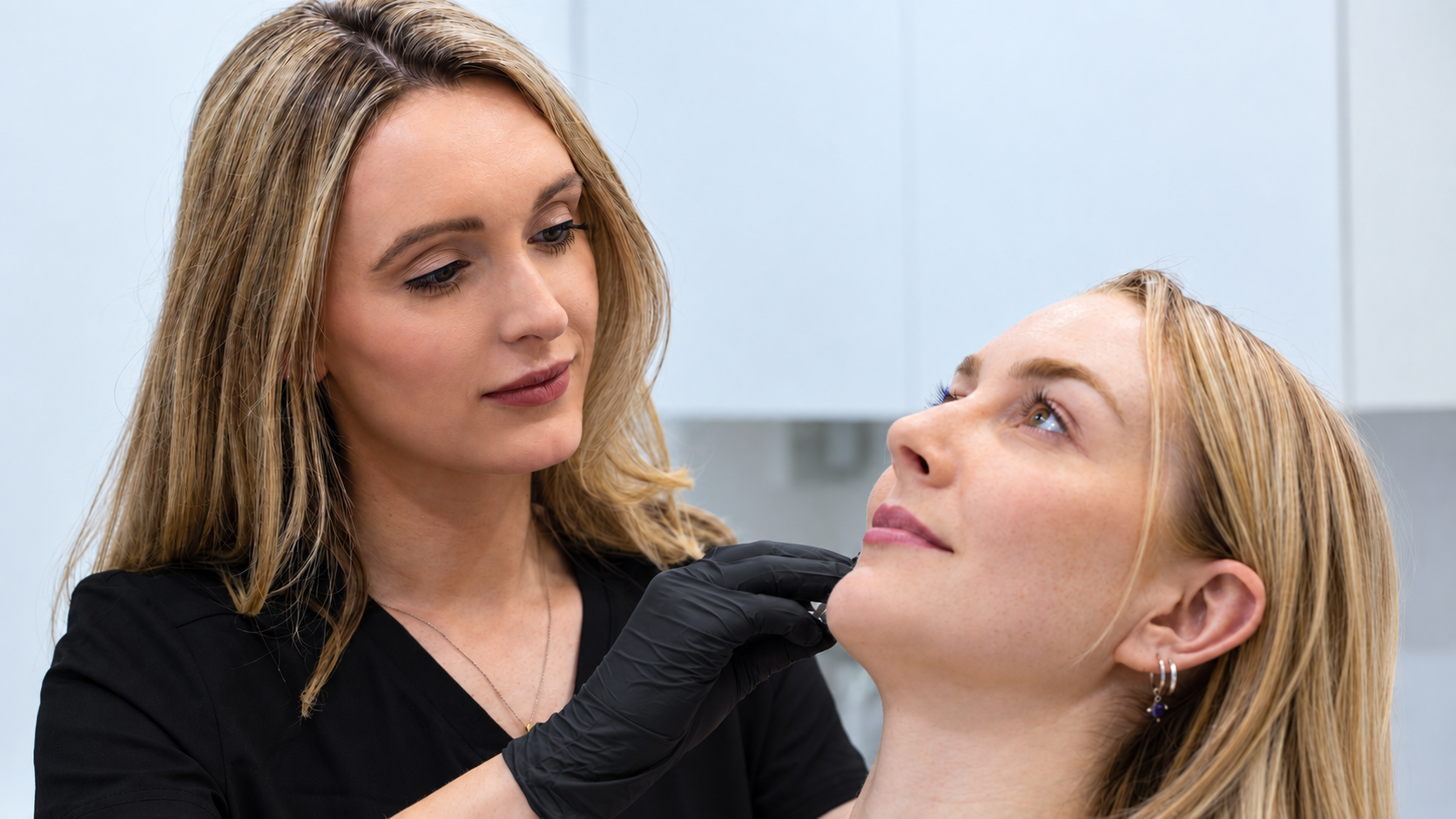
Before treatment is considered, the face should be assessed both at rest and during movement.
A practitioner may ask the patient to raise their eyebrows, frown, smile, screw up their eyes or tense their chin and neck. This helps identify:
Which muscles are creating the movement
How strongly each muscle is working
Whether one side is more active than the other
The natural position of the eyebrows
Whether the forehead is compensating for heaviness around the eyes
Which lines appear only during expression
Which lines remain visible at rest
How much movement the patient would like to preserve
The consultation should also include a complete medical history, current medications, previous treatments and a clear discussion about the desired outcome.
Two people with similar-looking lines may require very different plans. Treatment should therefore be based on individual anatomy and movement rather than a standard injection pattern.
Why the forehead needs particular care
The forehead muscle lifts the eyebrows. Some people naturally rely on this muscle more than others, particularly if they have a lower eyebrow position or heaviness around the upper eyelids.
If the forehead is treated too strongly without considering the rest of the upper face, the eyebrows may feel heavy or sit lower than intended.
The forehead should therefore be assessed alongside:
The natural position of the eyebrows
The strength of the frown muscles
Movement around the eyes
Existing eyelid or eyebrow heaviness
Natural facial asymmetry
The amount of movement the patient wants to retain
For some patients, preserving more forehead movement is important. In others, considering the balance between the forehead and frown muscles may be more appropriate.
The same dose and injection pattern should not automatically be used for everyone.
Will it make the face look frozen?
A frozen appearance is one of the biggest concerns patients have before their first treatment.
The final result is influenced by individual anatomy, muscle strength, the muscles selected, placement, dose and the amount of movement the patient would like to retain.
Some people want very subtle softening with plenty of visible expression. Others prefer less movement in a particular area. There is no single result that is right for everybody.
The aim of a natural treatment plan is generally to soften selected movements while preserving enough expression for the face to remain balanced and recognisable.
However, individual responses vary and no practitioner should guarantee a particular result.
What happens during the appointment?
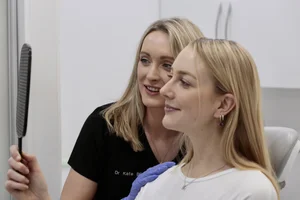
The appointment should begin with a medical consultation and facial assessment rather than going directly into treatment.
Clinical photographs may be taken while the face is relaxed and during different expressions. These provide a record of the starting point and can help with planning and reviewing the result.
If treatment is considered medically appropriate and the patient decides to proceed, a series of injections is placed into the selected muscles using a very fine needle.
The injections themselves usually take only a few minutes, although the consultation and assessment take longer.
Does it hurt?
Most patients describe the sensation as a quick pinprick or brief stinging feeling.
Small raised bumps or areas of redness can appear immediately afterwards. These usually settle quickly. Bruising is possible, as it is with any injectable treatment.
Pain tolerance varies, but the procedure is generally brief.
When will the result appear?
The effect is not immediate.
A change may begin to appear after several days, but the result develops gradually and can take approximately two weeks to settle fully.
Movement may reduce at slightly different rates across the face during the first week, so the final result should not be assessed too early.
Where appropriate, a review appointment allows the practitioner to reassess facial movement once the treatment has taken full effect and determine whether any adjustment is clinically suitable.
How long does it last?
Results commonly last around three to four months, although this varies between individuals and between different parts of the face.
Muscle strength, metabolism, dose, placement, previous treatment history and individual response can all affect duration.
The effect wears off gradually. Normal muscle movement slowly returns rather than suddenly switching back on.
Treatment does not have to be continued once it has been started. If no further treatment is undertaken, muscular movement will return over time.
Will stopping make the wrinkles worse?
Stopping treatment does not make wrinkles worse than they would otherwise have been.
As muscle movement returns, expression lines will gradually become visible again and the face will continue to age normally.
Some patients feel that their lines look more noticeable once the effect has worn off because they have become accustomed to seeing them softened.
What is “preventative” treatment?
The idea behind preventative treatment is that reducing repeated muscular movement may help prevent expression lines from becoming more deeply established.
However, this does not mean that everybody should begin treatment at a particular age.
Some people in their twenties have strong muscular movement and lines that remain visible at rest. Others may reach their forties or beyond with relatively few expression lines.
Age alone does not determine whether treatment is appropriate. Facial movement, skin quality, anatomy, personal concerns and expectations all need to be considered.
If there is very little muscular movement or the concern is mainly related to pigmentation, dehydration, skin texture or collagen loss, another treatment may be more appropriate.
Is treatment suitable for everybody?
No. Suitability must be assessed individually.
Treatment may not be appropriate for people who:
Are pregnant or breastfeeding
Have an infection in the proposed treatment area
Have certain neurological or muscular conditions
Have previously experienced an adverse reaction
Take certain medications
Have an anatomical feature that increases the risk of an unwanted outcome
A complete and accurate medical history should always be provided, even if something does not initially appear relevant.
There may also be occasions when treatment is medically possible but unlikely to achieve the desired result. A responsible consultation should include an honest discussion about limitations and alternative options.
What are the possible side effects?
All medical treatments carry potential risks.
Common temporary effects can include:
Redness or small bumps at the injection points
Tenderness
Bruising
Mild swelling
Headache
Less commonly, there may be temporary heaviness, asymmetry or an unintended change in the position of an eyebrow or eyelid.
Lower-face treatment carries additional considerations because these muscles are involved in smiling, speaking and controlling the lips. An unwanted effect in this area may temporarily affect expression or function.
Careful patient selection, conservative planning and a detailed understanding of facial anatomy are therefore essential.
The potential risks, benefits, alternatives and limitations should be explained clearly before a patient decides whether to proceed.
What happens after the appointment?
Patients should receive clear aftercare instructions following treatment.
As a general rule, rubbing or applying firm pressure to the treated areas should be avoided immediately afterwards. The treating practitioner should also provide individual advice about exercise, skincare, makeup and any other facial treatments that are planned.
The clinic should be contacted if anything unexpected develops or if there are concerns during the days following treatment.
Is anti-wrinkle treatment enough to improve every line?
No—and this is important to understand.
Facial lines and age-related changes are not caused by muscle movement alone. They can also be influenced by:
Collagen and elastin loss
Sun exposure
Skin dehydration
Pigmentation
Loss of facial volume
Changes in facial fat and bone
Skin laxity
Genetics and natural anatomy
Reducing muscular movement may soften a dynamic expression line, but it cannot replace lost volume, significantly tighten loose skin or correct pigmentation.
Depending on what is causing the concern, other options might include medical skincare, microneedling, chemical peels, polynucleotides, skin boosters, collagen-stimulating treatments or structural support.
Sometimes a combination plan is appropriate. Sometimes a different treatment would be more beneficial. Occasionally, the most honest advice is that treatment is unnecessary or unlikely to achieve what the patient wants.
What should be discussed during a first consultation?
Patients do not need to arrive knowing which product, dose or number of areas they want.
It can be more helpful to consider:
What specifically is causing concern?
When is it most noticeable?
Is it present at rest or only during movement?
How much facial expression should be retained?
What would a natural result look like?
Have there been any previous treatments?
Are there any particular fears or concerns?
Is there an important event approaching?
A good consultation should leave the patient feeling informed rather than persuaded.
The patient should understand what has been recommended, why it has been recommended, the potential alternatives and what the treatment can—and cannot—realistically achieve.
The most important thing to understand
Anti-wrinkle treatment is frequently described in terms of “one, two or three areas”, but the face does not function as a collection of isolated areas.
Its muscles work together. Some lift and others pull down, creating a continuous balance—or tug of war—across the upper face, lower face and neck.
Sometimes one carefully selected area is appropriate. In another person, considering several connected muscles may create a more balanced result. Every area considered should have a clear anatomical reason behind it.
It is also important to remember that not every line or age-related change is primarily caused by muscle movement. Skin quality, collagen loss, pigmentation, facial volume, underlying bone structure and natural anatomy may all contribute.
A good consultation should therefore begin with understanding what is causing the concern—not deciding how many areas to treat.
Patients should leave feeling informed about:
What is contributing to the concern
Whether treatment is medically appropriate
Which alternatives are available
What can realistically be achieved
Which movements should be preserved
The possible risks and limitations
There should never be pressure to proceed with treatment on the day.
This article is intended to provide general educational information and does not replace an individual medical consultation. Suitability, prescribing and treatment decisions must be determined following a complete medical assessment.
Written by Dr Kate Bennett-Brown
MBChB BMedSci (Hons) MRCS