Dark circles and tired-looking eyes: which under-eye treatment is right for you?
One of the most common things patients say to me in consultation is, “I look tired, even when I’m not.”
It may be dark circles that never seem to disappear, a hollow beneath the eyes, puffiness, fine lines or skin that has started to look thinner and more crepey. Often, several of these changes are happening together.
The key to successful under-eye rejuvenation is understanding exactly what is causing the concern.
Is the darkness coming from pigmentation within the skin? Is a deep tear trough creating a shadow? Has volume been lost from the cheeks and mid-face? Is the skin dehydrated, or has a loss of collagen and elastin affected its firmness and elasticity? Is puffiness being caused by fluid retention, or is there a more prominent fat pad beneath the eye?
Once we understand the anatomy - and which layer is contributing to the problem - we can choose a treatment that actually targets it.
Dark circles are a description, not a diagnosis. The key is understanding what exactly is creating the concern.
“Dark circles” is a phrase patients use to describe many different under-eye concerns, but it does not tell us what is causing them.
Two people can have very similar-looking dark circles for entirely different reasons. One may have increased pigment within the skin. Another may have a naturally deep tear trough that creates a shadow. Someone else may have thin, translucent skin through which the underlying blood vessels are more visible.
This is why a treatment that produces a beautiful result for one patient may make very little difference for another.
The aim of your consultation is to identify the cause before deciding on the treatment.
What can cause tired-looking under eyes?
A naturally deep tear trough
Some people naturally have a deeper groove between the lower eyelid and cheek, even when they are young.
This is simply part of their underlying anatomy. The hollow creates a shadow, which can make the under-eye area look dark despite there being no increased pigmentation within the skin itself.
Depending on the anatomy, carefully selected patients may benefit from structural support using dermal filler.
Volume loss through the tear trough or mid-face
As we age, the bone, fat and soft-tissue support around the eyes and cheeks gradually changes. This can make the junction between the lower eyelid and cheek appear deeper or less smooth.
However, what looks like an under-eye problem does not always begin directly beneath the eye. Loss of support through the cheek and mid-face can make the tear trough more noticeable.
In these cases, restoring subtle support to the cheek may improve the under-eye area without placing filler directly into the tear trough—or may reduce the amount of under-eye filler required.
Pigmentation
Dark circles can be caused by increased pigment within the skin. This may be genetic or related to sun exposure, inflammation, skin conditions or repeated rubbing of the eyes.
Pigmented dark circles need a different approach from shadows caused by hollowing. Adding filler beneath pigmented skin will not remove the pigment itself.
Depending on the cause and your skin type, treatment may include carefully selected medical-grade skincare or other pigmentation-focused options.
Thin skin and visible blood vessels
Under-eye skin is naturally very thin. As it becomes thinner with age, the underlying blood vessels and muscle can become more visible, creating a blue, purple or darker appearance.
Improving the quality, hydration and resilience of the skin may be more helpful here than trying to add volume.
Loss of collagen, elastin and skin quality
With time, the skin produces less collagen and elastin. This can lead to fine lines, crepey texture, reduced firmness and slower “snap-back” when the skin is gently moved.
These changes may be particularly noticeable when smiling or wearing makeup, which can begin to settle into the fine lines.
Treatments intended to improve skin quality—such as under-eye polynucleotides or carefully selected skin boosters—may be more appropriate when this is the primary concern.
Dehydration
Dehydrated under-eye skin can appear dull, finely lined and less smooth. This is different from having a structural hollow.
Skin boosters can be used in selected patients to improve hydration and skin texture without attempting to create the same structural change as dermal filler.
Puffiness and fluid retention
Some patients are more prone to fluid collecting beneath the eyes. This may fluctuate with sleep, allergies, alcohol, salt intake, hormones or general health.
It is important to identify a tendency towards puffiness before considering treatment. Hyaluronic-acid filler attracts water, so placing it into an area already prone to fluid retention can sometimes make the under-eyes appear heavier.
Prominent fat pads or orbital fat prolapse
Under-eye bags can develop when the fat pads that normally sit within the eye socket become more prominent.
This is not the same as a tear trough hollow, although a patient may have both. Filling around a prominent fat pad can sometimes disguise a very mild contour irregularity, but in other cases it may make the area look fuller or puffier.
When a prominent fat pad or significant excess skin is the main concern, surgery may provide a more appropriate and predictable result. If I believe that a non-surgical treatment is unlikely to give you the result you want, I will tell you honestly and direct you towards the appropriate specialist.
Muscle activity and the under-eye “jelly roll”
A “jelly roll” describes the small bulge that can appear immediately beneath the lower eyelashes when smiling or squinting. It is created by the activity of the orbicularis oculi muscle rather than by volume loss or poor skin quality.
This is another example of why the correct diagnosis matters: filler and polynucleotides do not reduce muscle activity.
Following a full medical assessment, prescription-only wrinkle-relaxing treatment may sometimes be discussed where muscle activity is the principal concern. This will not be appropriate for everyone, and careful assessment of lower-eyelid support, smile dynamics and surrounding anatomy is essential.
What happens during an under-eye consultation?
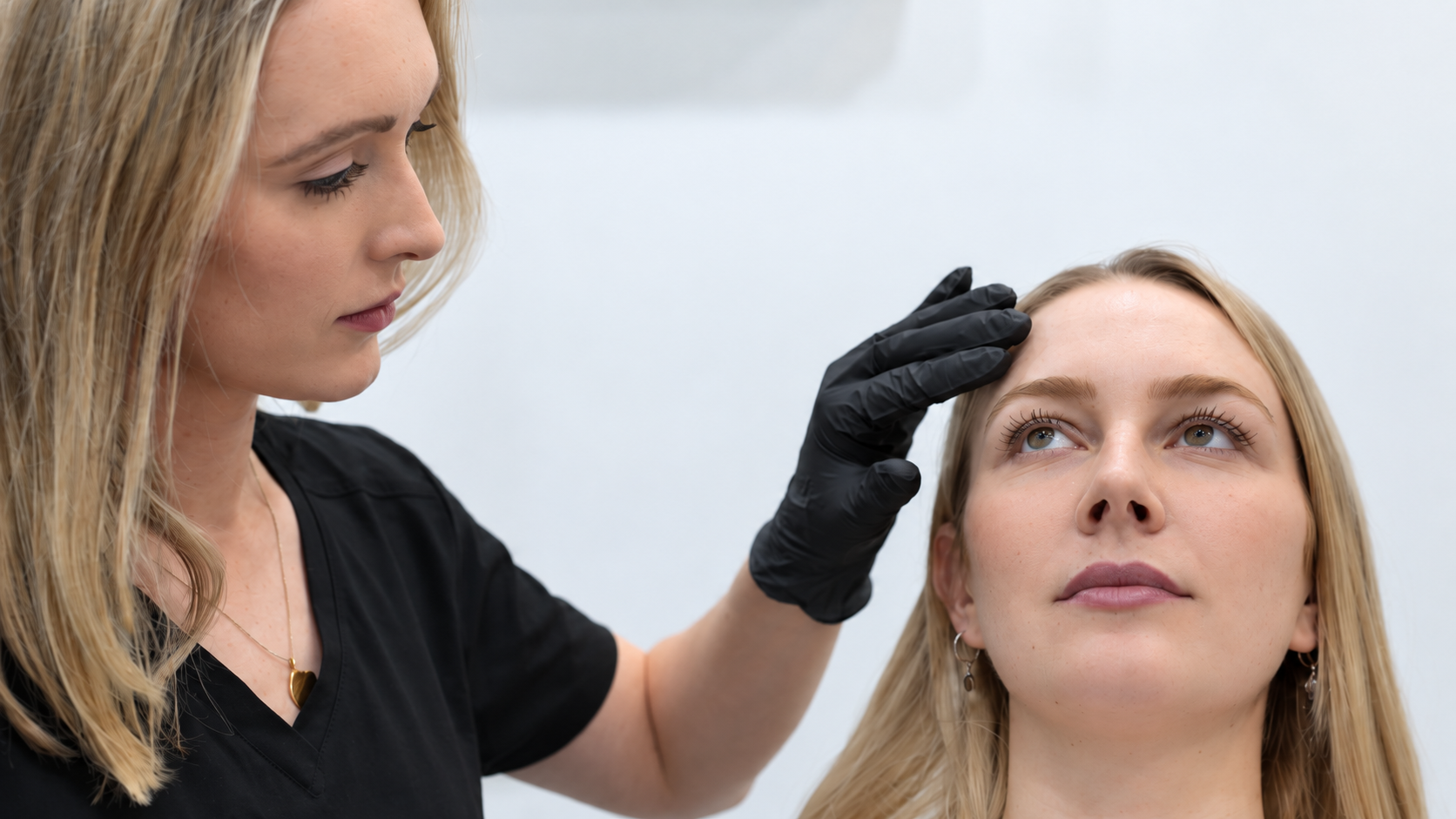
Patients often arrive asking for the treatment they have seen online—usually tear trough filler or under-eye polynucleotides. My first step is to take the treatment name out of the equation and assess what is actually creating the concern.
I will look at:
The depth and shape of the tear trough
Whether the hollow is natural or related to ageing
Cheek and mid-face support
Skin thickness, hydration and elasticity
Fine lines and skin laxity
Pigmentation and visible blood vessels
Muscle activity when smiling
Puffiness or fluid retention
The position of the under-eye fat pads
Previous filler or other aesthetic treatments
Your facial anatomy and proportions as a whole
This allows me to explain what I can see, which treatment options may help and, just as importantly, which treatments are unlikely to help.
Not sure what is causing your dark circles?
An in-person assessment allows Dr Kate to examine your skin quality, tear trough anatomy, mid-face support and facial movement before recommending the most appropriate options.
Polynucleotides for dark circles and under-eye skin
Under-eye polynucleotides are one of my most frequently discussed treatments for patients concerned about thin, crepey or tired-looking skin.
Polynucleotides are injectable treatments containing highly purified DNA fragments, commonly derived from salmon or trout. Rather than filling a hollow or adding noticeable volume, they are used with the aim of supporting skin quality, hydration and elasticity.
Depending on the patient, under-eye polynucleotides may help the skin appear:
Better hydrated
Smoother in texture
Less crepey
Firmer and more resilient
Fresher and healthier over time
They may also improve the overall appearance of some dark circles where thin, poor-quality skin is contributing to the darkness. However, they will not remove a prominent fat pad, correct significant excess skin or completely fill a deep structural tear trough.
I use polynucleotide products formulated for the delicate eye area, including Ameela Eyes and Plinest Eye. The most suitable product and treatment schedule will depend on your skin, anatomy and individual concerns.
Is this the “salmon sperm facial”?
“Salmon sperm facial” is the viral phrase that has made polynucleotides famous, but it is not a particularly accurate description.
These are injectable medical-aesthetic treatments rather than traditional facials. The products contain purified polynucleotide material derived from fish DNA and undergo extensive manufacturing and purification before they are used in clinic.
The nickname may be memorable, but the important questions are whether polynucleotides are appropriate for your concern, which formulation is being used and whether the treatment is being performed by an experienced medical practitioner.
Under-eye skin boosters
Skin boosters and polynucleotides are often grouped together online, but they are not identical.
Skin boosters generally contain ingredients such as hyaluronic acid and are used primarily to improve hydration, smoothness and the appearance of fine lines. They do not provide the structural projection or contouring associated with traditional dermal filler.
A skin booster may be considered when dehydration and fine surface lines are more prominent than hollowing. As with any treatment close to the eyes, the product, placement and patient selection are important because some people are more prone to swelling.
Tear trough filler for under-eye hollows
Tear trough filler is a hyaluronic-acid dermal filler treatment used to soften a true hollow between the lower eyelid and cheek.
For a carefully selected patient, conservative treatment can reduce the shadow created by the hollow and make the face appear fresher and less tired. The goal is to smooth the transition between the lower eyelid and cheek—not to fill every line or create visible volume beneath the eyes.
Tear trough filler may be considered when there is:
A clearly defined structural hollow
Suitable skin thickness and quality
Minimal under-eye puffiness
Good lower-eyelid support
Appropriate cheek and mid-face anatomy
A realistic expectation of what filler can achieve
It will not directly treat pigmentation, muscle activity or significant skin laxity.
When might tear trough filler be the wrong treatment?
Tear trough filler may not be appropriate if you have:
Prominent under-eye bags
A tendency towards puffiness or fluid retention
Significant excess skin or laxity
Extremely thin skin
Predominantly pigmented dark circles
Poor lower-eyelid support
Previous under-eye filler that remains visible or has migrated
Anatomy that makes a predictable, natural result unlikely
Possible complications include bruising, prolonged swelling, lumps, visible filler and blue-grey discolouration known as the Tyndall effect. More serious vascular complications are uncommon but possible.
This is why tear trough filler should never be treated as a quick, standardised procedure. It requires careful medical assessment, conservative planning and a detailed understanding of the anatomy around the eye.
Treating the cheeks rather than the tear trough
Sometimes the most natural way to improve the under-eye area is not to inject beneath the eye at all.
If reduced mid-face support is contributing to the hollow, carefully placed cheek filler may soften the transition into the tear trough. This can create a more balanced improvement while avoiding unnecessary product in the delicate under-eye area.
The aim is not to create large or prominent cheeks. It is to restore support in a way that respects your natural facial shape.
Treatments for under-eye pigmentation
If pigment is the main cause of dark circles, the treatment plan needs to focus on the skin rather than volume.
Depending on your medical history, skin type and the underlying cause, this may include:
Medical-grade skincare
Daily broad-spectrum sun protection
Carefully selected pigment-regulating ingredients
Treatment of inflammation or irritation
Skin-quality treatments where appropriate
Referral for specialist dermatological assessment if required
Pigmentation around the eyes can be complex, and strong active ingredients or peels are not automatically suitable for the delicate eyelid skin. A personalised plan is safer and more effective than experimenting with multiple products at home.
When is surgery the best option?
Non-surgical treatments can improve many under-eye concerns, but they cannot correct everything.
If significant skin laxity, excess skin or prominent orbital fat pads are causing the problem, a surgical procedure such as blepharoplasty may offer a better result.
I do not perform under-eye surgery, but I will give you an honest answer if I believe it is the most appropriate route and can advise you to seek assessment from a suitably qualified surgical specialist.
Good aesthetic medicine is not about finding a way to treat every patient. It is about recognising which option is most likely to help.
Polynucleotides, skin boosters or tear trough filler: which do I need?
These treatments target different layers and different problems.
Polynucleotides may be considered when:
Skin quality is the principal concern
The skin appears thin or crepey
Fine lines and reduced elasticity are becoming noticeable
You want a gradual, subtle improvement
You are unsuitable for—or would prefer to avoid—tear trough filler
Skin boosters may be considered when:
Dehydration is contributing to fine lines
The skin needs improved hydration and smoothness
Structural volume loss is not the primary concern
Tear trough or mid-face filler may be considered when:
A structural hollow is creating a visible shadow
Your anatomy and skin quality are suitable
You have minimal puffiness
Restoring support is likely to address the underlying cause
A different approach may be required when:
Pigmentation is the principal cause
Muscle activity is creating a jelly roll
Fluid retention is causing puffiness
Prominent fat pads or excess skin would be better addressed surgically
Some patients benefit from a staged combination of treatments, while others only need one. The aim is not to do as much as possible. It is to target the right layer with the right treatment.
How many under-eye polynucleotide treatments will I need?
Polynucleotides are usually performed as a course rather than a one-off treatment. A typical initial plan involves three sessions spaced several weeks apart, followed by maintenance treatment where appropriate.
Small raised bumps can be visible immediately after treatment, and temporary swelling, redness or bruising may occur. Results develop gradually as the skin responds, rather than appearing overnight.
Your recommended schedule will be discussed during your consultation.
What is the best treatment for my dark circles?
The best treatment begins with understanding what is causing them.
Dark circles may come from pigmentation, thin skin, visible blood vessels, dehydration, structural hollowing—or a combination of several factors. Puffiness may be caused by temporary fluid retention or by a prominent fat pad. Fine lines may relate to skin quality, muscle movement or both.
This is where an expert assessment becomes valuable. Instead of choosing a treatment because it is currently popular, you can understand your anatomy and receive a plan designed around the concern you actually have.
Dr Kate Bennett-Brown is a UK-trained medical doctor with an MRCS qualification, a surgical background and over five years’ experience in aesthetic medicine. Under-eye assessments and treatments are available at Dr Kate BB Aesthetics in Battersea and Fulham, conveniently located for patients travelling from Clapham, Nine Elms, Wandsworth, Chelsea and across London.
If you are concerned about dark circles, under-eye hollows, puffiness or fine lines, book a consultation with Dr Kate for a personalised medical assessment.