Most of us look after our skin reactively. We notice a new line, a dull week or a change in the mirror, and we reach for whatever is trending. It's understandable, but it's also why so many people end up with full bathroom shelves, a few random treatments, and no real sense of whether any of it is working.
The aesthetics and skincare industry is very good at marketing. My job is the opposite: to cut through the noise, look at what the evidence actually supports, and be honest with you about what's worth your time and money, and what isn't.
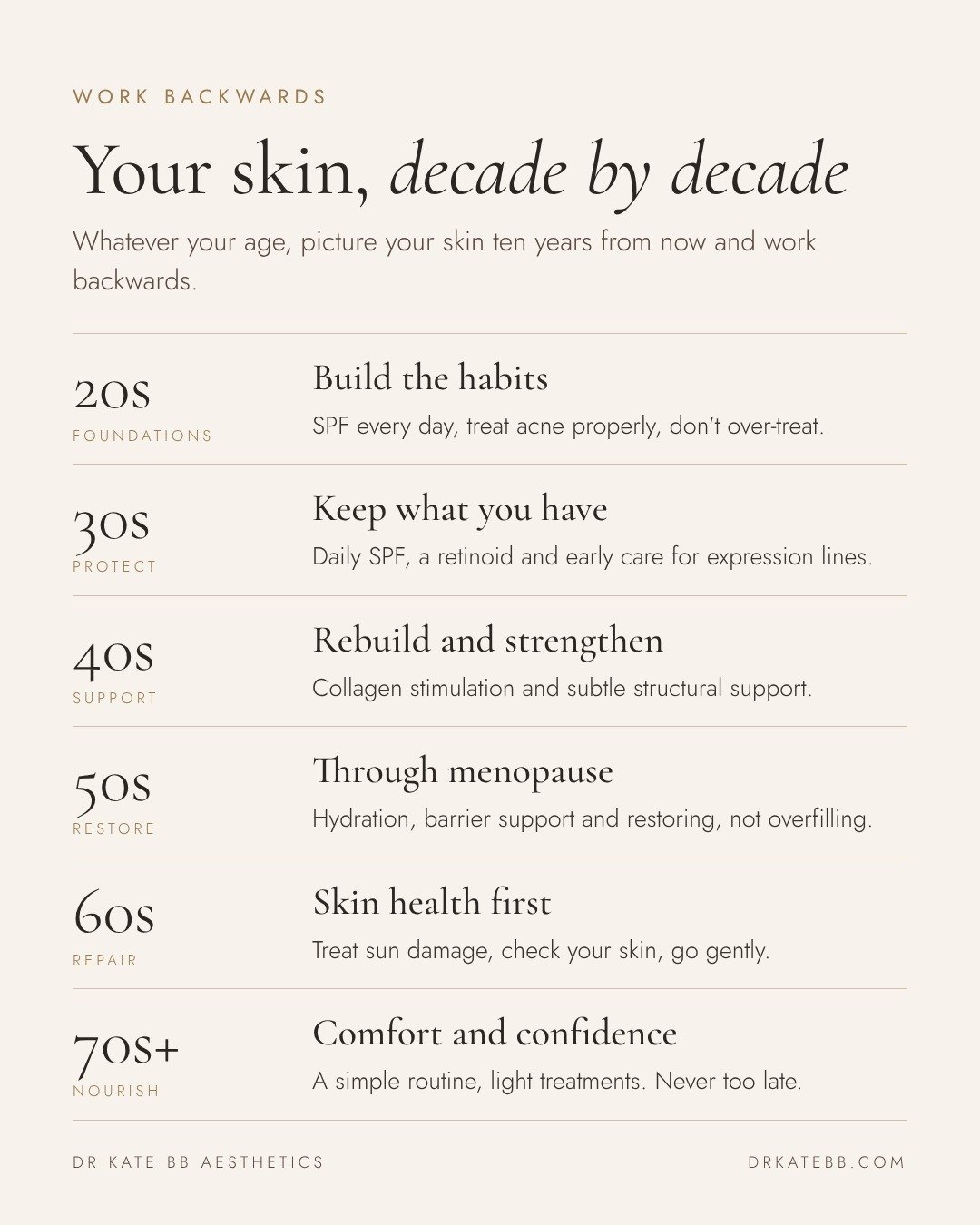
There's a better way to think about your skin, whatever your age: picture the skin you'd like to have ten years from now, and work backwards. If you're 35, that's your mid-forties. If you're 50, it's your 60s, and if you're 60, it's your 70s. The principle is the same at every stage. Small, well-chosen steps now are usually gentler, more affordable and more natural-looking than trying to correct things later. And it is never too late to start: skin responds to good care at any age.
What actually changes, and when
Ageing isn't one thing. It happens in layers, and each layer needs something different.
Collagen and elastin start to decline gradually from our mid-twenties, so skin slowly becomes thinner and less firm.
Hormones play a bigger role than most people realise. After menopause, collagen loss speeds up considerably, and skin often becomes drier and more fragile.
Sun exposure is the biggest single driver of visible skin ageing: uneven tone, sun spots, texture, fine lines and loss of elasticity.
Expression lines start as movement and, over years, can settle into lines that stay even when your face is at rest.
Volume and structure change too. Fat pads shift and bone gradually remodels, which is why the mid-face and jawline can look different over time, even with good skin.
Understanding which of these is affecting you, and in what order, is what turns guesswork into a plan.
Cutting through the marketing
Every month there's a new miracle ingredient, a viral treatment or a celebrity routine. Some are genuinely useful. Many are expensive versions of something simpler, and some simply aren't backed by good evidence.
My approach is straightforward: I recommend treatments and products with solid evidence behind them, I explain why, and I'll tell you honestly when something isn't worth it, even if that means doing less. The best results usually come from the basics done well and consistently, with in-clinic treatments chosen carefully rather than collected.
Strip it back: the few things that genuinely work
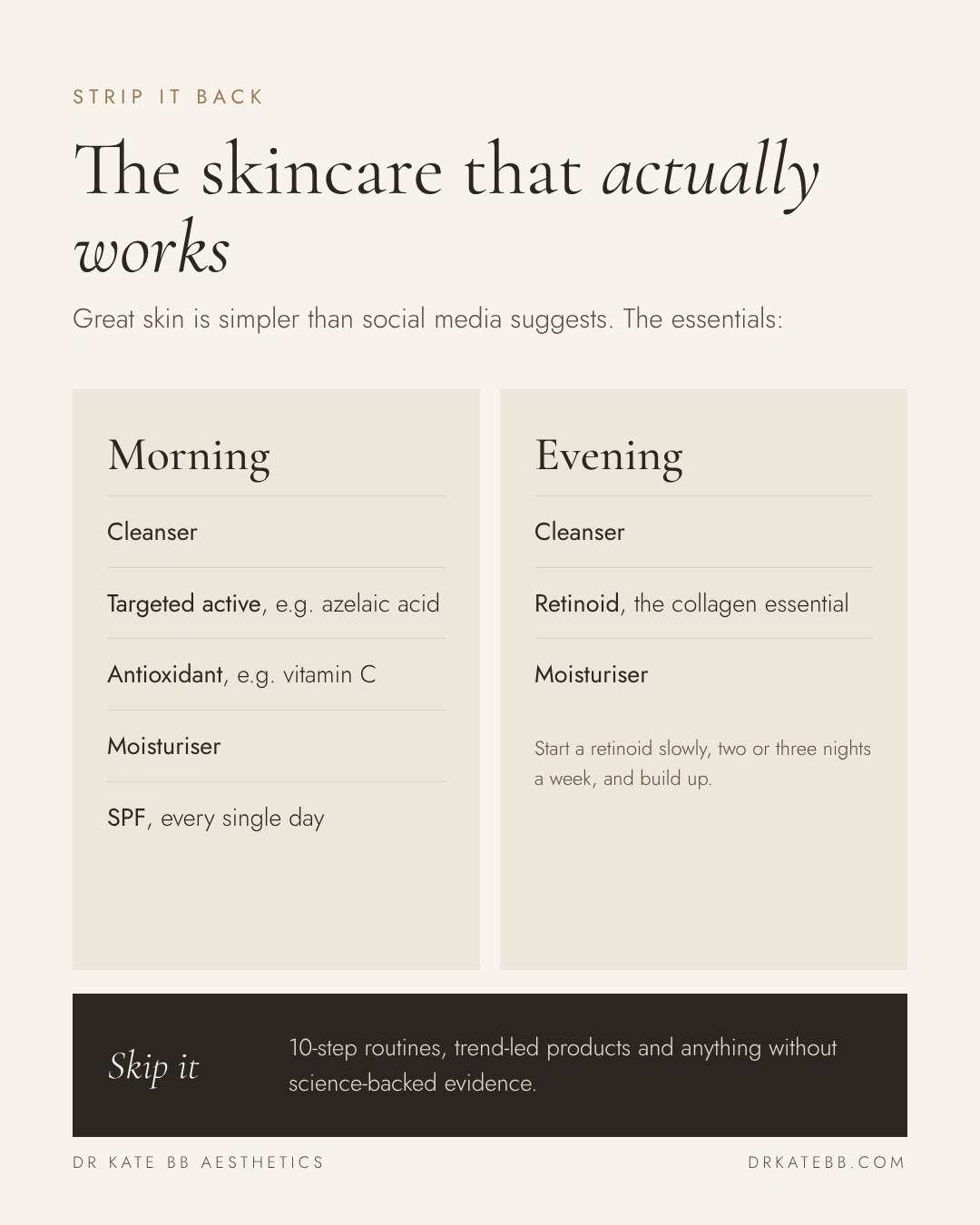
Great skin is far simpler than social media suggests. For most people, at any age, the essentials are:
Daily SPF, every single day. It's the most effective anti-ageing step there is, and the one most often skipped.
A retinoid in the evening. Retinoids are the gold standard topical treatment for both acne and skin ageing, backed by decades of research. They speed up skin cell turnover, help boost collagen, and can improve signs of sun damage. Interestingly, they started life as an acne treatment: researchers later noticed that people using them were ageing better, and they became one of the most trusted anti-ageing ingredients we have. Studies show they still improve skin in people in their 70s and 80s. Start slowly, two or three nights a week, and build up.
An antioxidant in the morning, such as vitamin C, to help protect against daily environmental damage.
A targeted active where you need it, for example azelaic acid for redness or congestion.
A good moisturiser to support your skin barrier, which matters more and more as we get older.
SPF is the non-negotiable partner. Daily UV exposure breaks down the very collagen your retinoid is working to build. A retinoid without daily SPF is like filling a bath with the plug out. Together, they're the most effective, evidence-based anti-ageing routine there is.
Everything else is optional. A 10-step routine of products chosen at random will rarely beat a simple routine of the right products, used consistently.
Of course, if you have a skin condition, particularly an inflammatory one such as acne, rosacea or eczema, the right products for you are more specific and need to be tailored to your skin. That's where seeing a doctor or dermatologist really matters.
Give it time. Skincare changes don't happen overnight. Most products need at least 8 to 12 weeks to show what they can do, and it's consistency, not intensity, that gets results.
In your 20s: build the foundations
Your 20s aren't about treatments. They're about habits, and the habits you build now are the ones that pay off for decades.
Make SPF automatic. Most visible skin ageing is sun damage, and it starts accumulating long before you can see it.
Treat acne properly. Persistent breakouts deserve proper medical treatment, not just products from social media, because the goal is to prevent scarring that's much harder to treat later.
Introduce a retinoid in your mid to late 20s, slowly, if your skin tolerates it.
Don't over-treat. Great skin in your 20s rarely needs injectables. A simple, consistent routine and healthy habits do most of the work.
In your 30s: protect what you have
Your 30s are the ideal time to start. You're not correcting much yet; you're protecting.
Protect your collagen with SPF, a retinoid and, if your skin needs it, treatments that support skin quality, such as microneedling, polynucleotides or skin boosters.
Soften expression lines early. Treating movement lines lightly and early helps stop them settling in.
Be consistent. Small things done regularly beat big things done occasionally.
In your 40s: support and structure
In your 40s, skin quality is still important, but structure starts to matter more.
Collagen stimulation becomes a priority. Treatments such as Sculptra or Radiesse work gradually, encouraging your skin to build its own support.
Subtle In your 20s: build the foundations
Your 20s aren't about treatments. They're about habits, and the habits you build now are the ones that pay off for decades.
Make SPF automatic. Most visible skin ageing is sun damage, and it starts accumulating long before you can see it.
Treat acne properly. Persistent breakouts deserve proper medical treatment, not just products from social media, because the goal is to prevent scarring that's much harder to treat later.
Introduce a retinoid in your mid to late 20s, slowly, if your skin tolerates it.
Don't over-treat. Great skin in your 20s rarely needs injectables. A simple, consistent routine and healthy habits do most of the work.structural support can restore balance where volume has changed, often with far less product than people expect.
Keep investing in skin quality, because healthy, hydrated skin makes everything else look better.
In your 50s: through menopause and beyond
For many women, the 50s bring the biggest change in skin in the shortest time. Skin can lose around 30% of its collagen in the first five years after menopause, and many people notice dryness, laxity and a change in how makeup sits almost overnight.
Prioritise hydration and the skin barrier. Richer moisturisers, gentle cleansing and hydrating treatments such as Profhilo or skin boosters can make a real difference to comfort and glow.
Keep stimulating collagen. Your retinoid, collagen-stimulating injectables and microneedling all still work, and this is when they earn their place.
Restore, don't overfill. Well-placed structural support at the cheekbones, temples and jawline looks far more natural than chasing every line with filler.
Talk to your GP about HRT if it's relevant to you. It isn't a skincare decision, but many women notice it helps their skin as well as their symptoms.
In your 60s: skin health first
In your 60s, the focus shifts towards the health of the skin itself. Skin is thinner and slower to repair, and decades of sun exposure tend to show as pigmentation, sun spots and rough texture.
Treat sun damage. Medical-grade skincare and carefully chosen peels can improve pigmentation and texture, and make skin look brighter and more even.
Check your skin. Any new, changing or non-healing spot should be checked by a doctor. Good skin care is also about catching problems early.
Go gently. Treatments are still very effective, but they need to be adapted to thinner skin, with lighter, more gradual changes.
Look natural, not "done". The goal is to look fresh, rested and like yourself, never to look like you're trying to be 40.
In your 70s and beyond: comfort, health and confidence
It is never too late to look after your skin, and good skin care in your 70s is as much about comfort and health as appearance.
Protect the barrier. Skin is drier and more fragile, so a simple routine with a gentle cleanser, a rich moisturiser and daily SPF matters more than ever.
Keep using a retinoid if your skin tolerates it. The evidence shows it still helps, even at this stage.
Keep treatments light and well-judged. Small improvements in skin quality and tone can make a noticeable difference to how you feel when you look in the mirror.
The lifestyle factors that quietly matter
No treatment can outwork your habits. Skincare and in-clinic treatments work best on a body that's well looked after, and the basics show in your skin over time, at every age.
Sleep: skin does much of its repair overnight. Consistently short sleep shows as dullness, puffiness and a more tired look.
Diet: collagen is built from protein, and vitamin C is essential for making it. A varied diet with enough protein, fruit, vegetables and healthy fats supports your skin from within. Diets very high in sugar may also contribute to collagen damage over time.
Alcohol: it dehydrates the skin, can worsen redness and flushing, and disrupts sleep, so moderation helps on several fronts.
Smoking: one of the biggest accelerators of skin ageing, reducing blood flow and breaking down collagen and elastin. Stopping is one of the best things you can do for your skin.
Stress: chronic stress can trigger flare-ups such as breakouts and redness, and affects sleep.
Movement: regular exercise supports circulation and overall health, and it shows.
None of this needs to be perfect. Small, consistent improvements add up, just like your skincare.
Why a plan beats guesswork
The real value isn't any single treatment. It's honest, evidence-based advice about what to do, in what order, and what to leave alone. A good plan saves you money, protects natural results, and means every step builds on the last, whether you're 35 or 65.
Your Full Face Assessment
This is exactly what my Full Face Assessment is for. I look at your whole face, your skin and how you are ageing, and then tell you what I'd recommend for this year, the next five and beyond: what works, what to skip, and where your money is best spent. No hype and no pressure: just honest advice based on what genuinely works for your face. You'll receive a personal written plan afterwards.
The assessment is £75, with me personally, and fully redeemable against any treatment in the same appointment.
Find out more about the Full Face Assessment →
Related reading
Dr Kate Bennett-Brown MBChB BMedSc (Hons) MRCS, GMC 7663694