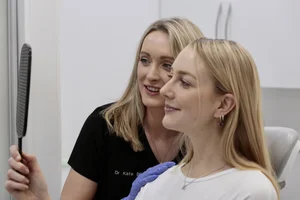
Winter does something to skin that moisturiser alone can’t fix. Cold wind, central heating and hot showers pull water out of it, so it looks flat and dull, makeup sits badly, and fine lines you barely noticed in summer suddenly show. Your face hasn’t changed. Your skin has simply lost hydration, and skin that is dehydrated from within needs something that works from within.
That is exactly what BabyGlow is designed for, and it is the closest thing to what people call glass skin: smooth, hydrated, light-reflecting skin that looks healthy even with no makeup on.
[bg-hero]
What BabyGlow actually is
BabyGlow is a skin quality technique developed by Teoxane. It is not a filler and it is not a cream. It uses Teoxane Redensity 1, a very fluid hyaluronic acid that spreads evenly through the skin rather than sitting in lumps, which is why the result looks smooth and even rather than patchy.
Hyaluronic acid is a molecule your skin already makes, and it is famous for holding on to water. Redensity 1 is also formulated with amino acids, the building blocks skin uses to make its own structure, along with antioxidants, minerals and vitamin B6. The aim is skin that holds more moisture, looks smoother and has a fresh, rested glow, while your features stay exactly as they are.
Eight injection points on each side of the face, and why that matters
Skin boosters are not all the same, and neither is how they are placed. BabyGlow follows a defined map of eight injection points on each side of the face, placed just beneath the surface of the skin. Using the same map each time means the product is spread across the whole face evenly, so the glow is consistent from cheek to forehead instead of patchy. It is also a generous treatment: Redensity 1 comes in a 3 ml syringe, which is a high volume for a skin booster. More product, placed methodically across the whole face, is what gives that overall hydrated, fresher look. Dr Kate combines the map with a careful assessment of your face and skin, because no two faces are identical.
Why it is not filler (and why that is the point)
Filler adds structure and volume, so it changes shape. BabyGlow does neither. It does not add volume and it does not change your features. If you want to look like yourself on a very good day, a skin booster is the treatment. If your main concern is volume loss or facial shape, a different approach may be more suitable, and Dr Kate will discuss the right options with you honestly at your consultation.
What it can help with
Deep hydration: skin that feels softer, plumper and more comfortable.
Glow: a fresher, more luminous complexion in place of flat, tired-looking skin, the glass skin look.
Smoother texture: rough, dry or uneven-feeling skin can look and feel smoother.
Fine lines: lines around the eyes, mouth and forehead can look softer as hydration improves.
A rested look: the kind of freshness people notice without being able to say why.
[bg-grid]
Why choose it before Christmas
A usual BabyGlow course is one session, followed by a second session about four weeks later, with results typically lasting around three to six months depending on your plan. That makes timing matter. Starting in early November means your course can be finished before the party season, whereas leaving it until December may only leave time for one session. Downtime is usually minimal, and numbing cream can be applied first, so treatment fits easily around a normal week.
How it works with the rest of your skin plan
A skin booster is excellent for hydration and glow. If you also want to work on collagen, or on a specific area such as the under-eyes, treatments can be planned alongside it. At your consultation, Dr Kate will advise whether BabyGlow, another skin booster, Profhilo or polynucleotides is the right fit, and in what order.
What happens at your consultation
The consultation is £75 and is redeemable against any treatment you have during the same appointment. Dr Kate takes a full medical history, assesses your skin and face, and creates a personalised plan, with no obligation to proceed. If a treatment is not right for you, she will tell you. BabyGlow is £495 per session.
As with any injectable, there can be temporary redness or small bumps, which usually settle within 24 hours. The risk of bruising is minimal. Risks and aftercare are explained in clinic.
Frequently asked questions
Does it hurt? Numbing cream can be applied first, and most people describe it as quick and tolerable.
Is there downtime? Usually minimal. Small bumps and redness can occur, and they usually settle within 24 hours. The risk of bruising is minimal.
How long does it last? Results typically last around three to six months depending on your plan, and top-ups are planned individually.
How is it different from Profhilo or polynucleotides? All three focus on skin quality rather than shape. Dr Kate will explain which suits you at your consultation.
Book your consultation
Appointments are available at The Cosmetic Dental Gallery in Battersea. Book your consultation online through Glowday.
Dr Kate Bennett-Brown MBChB BMedSc (Hons) MRCS, GMC 7663694